
Last updated November 14, 2026
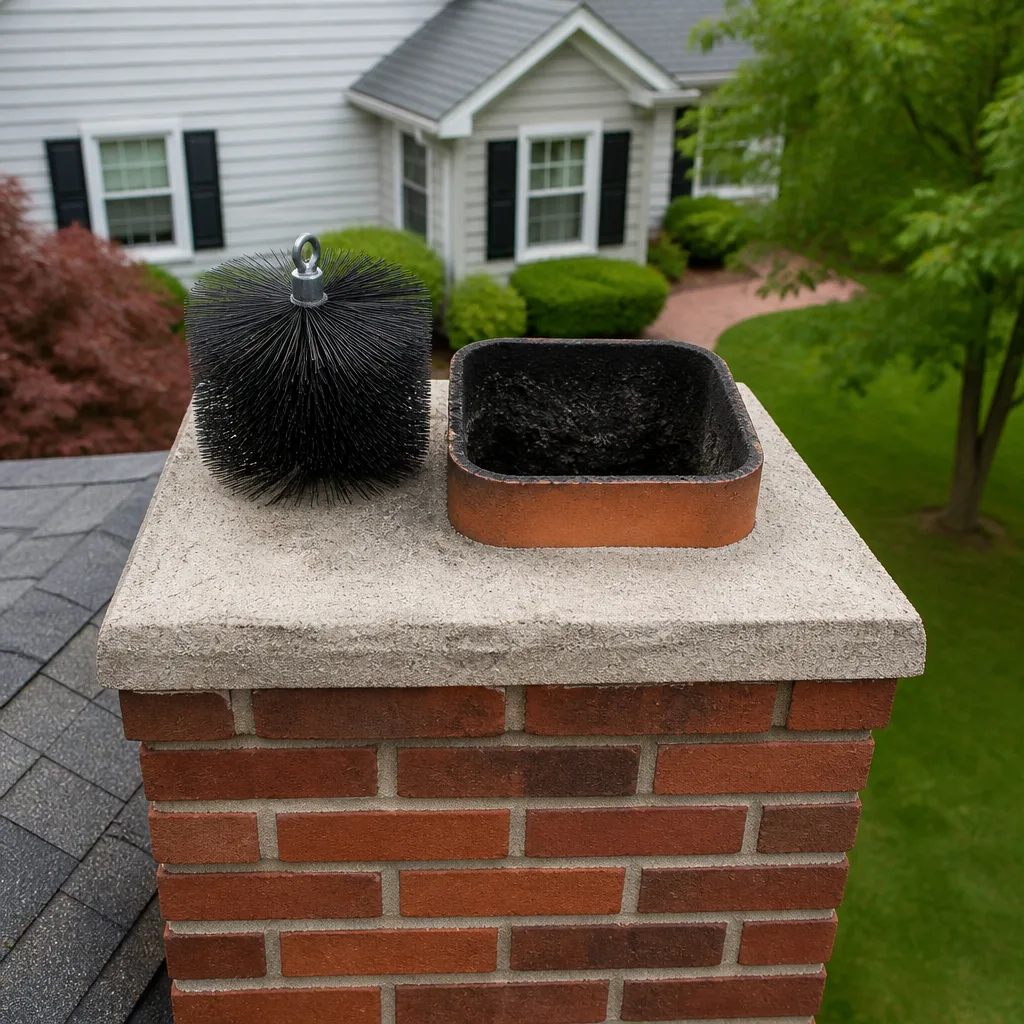 Sweep & inspection
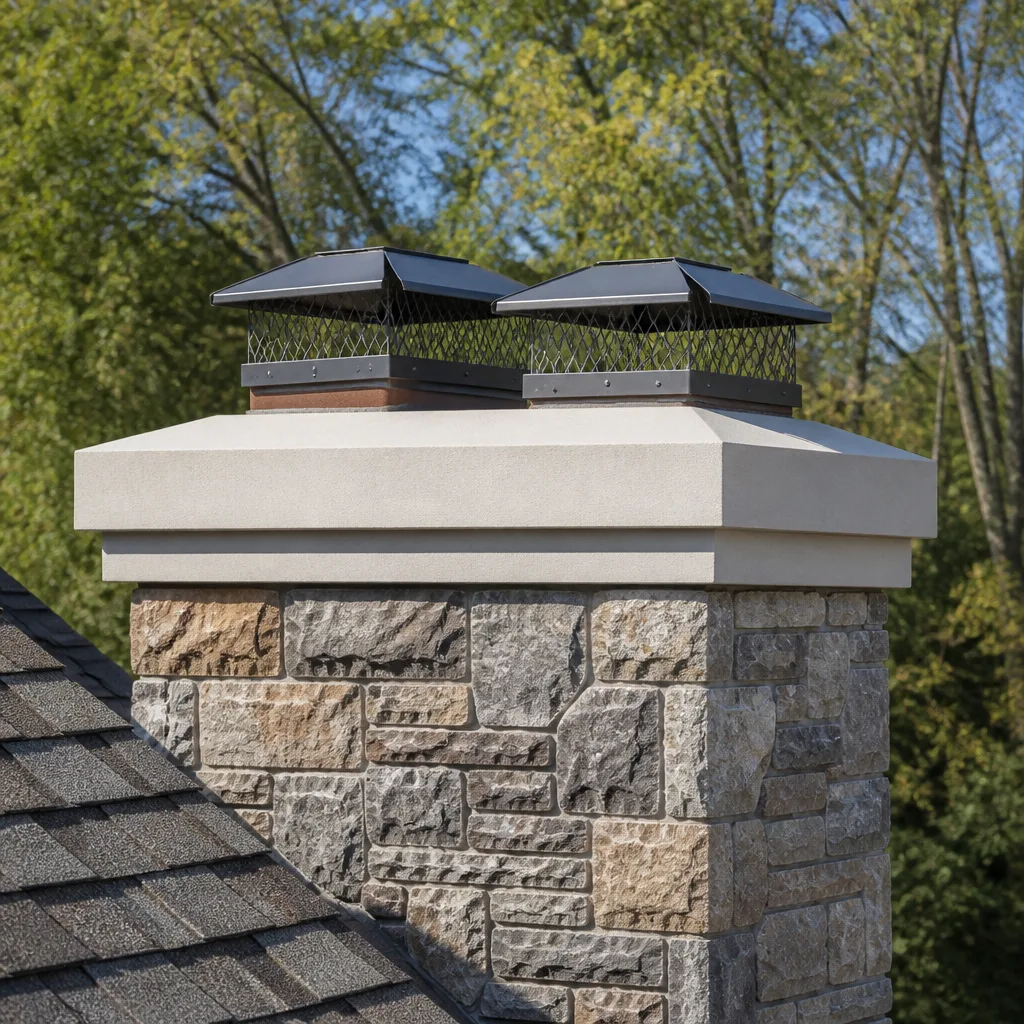 Caps & crowns
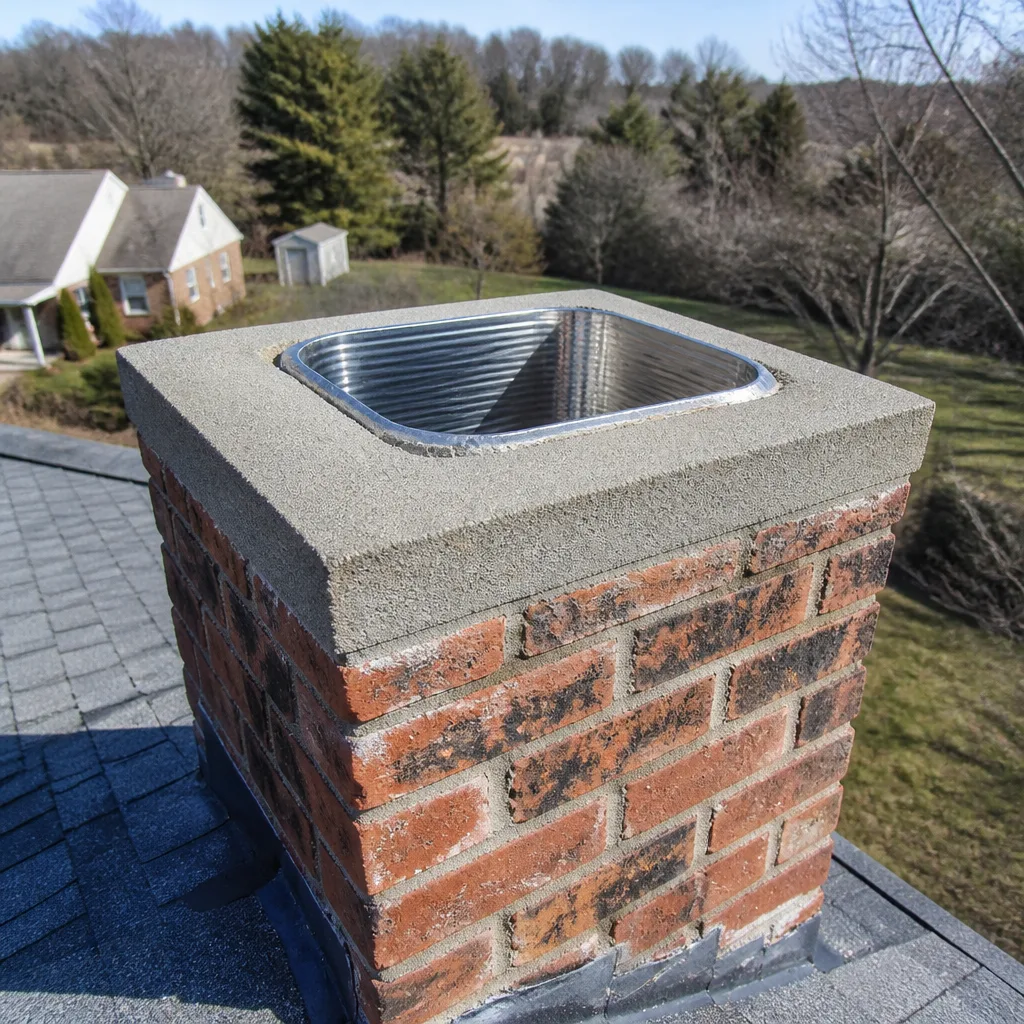 Flue relining
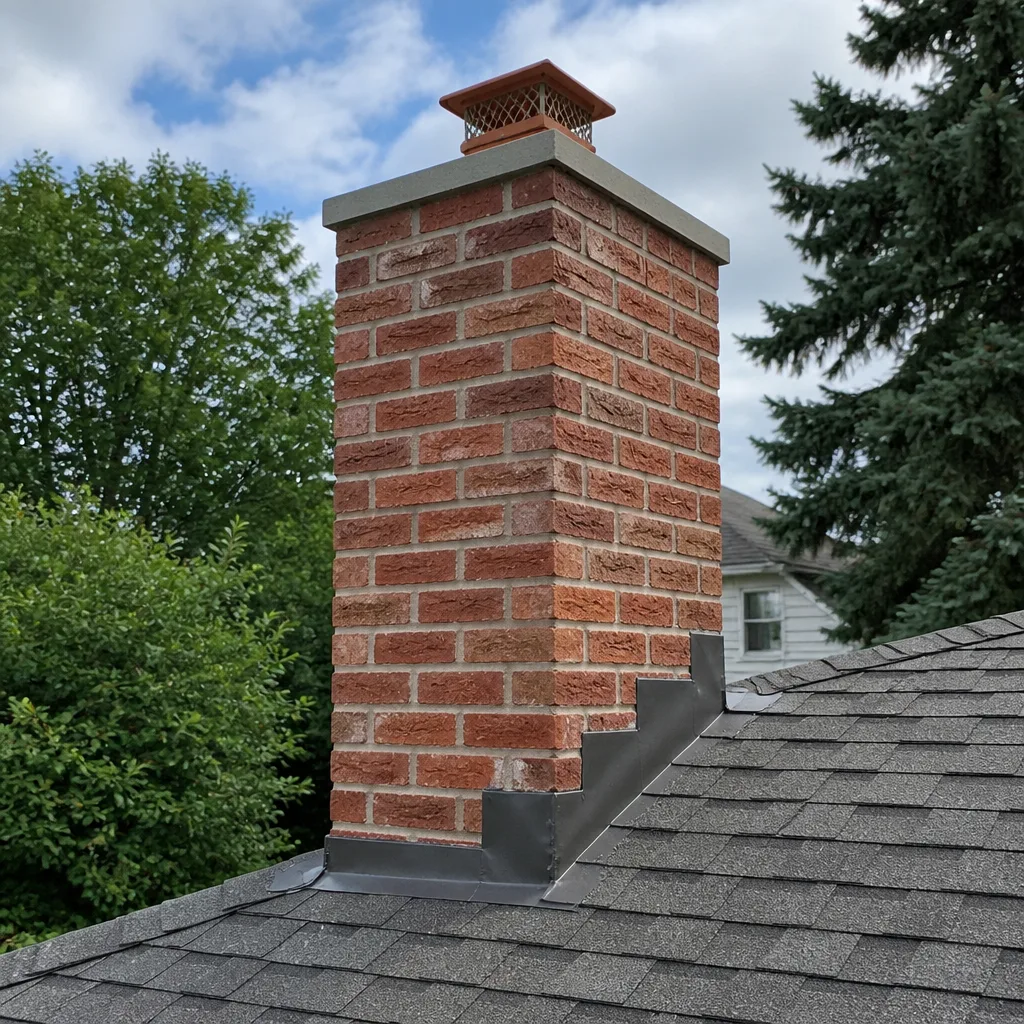 Masonry repair
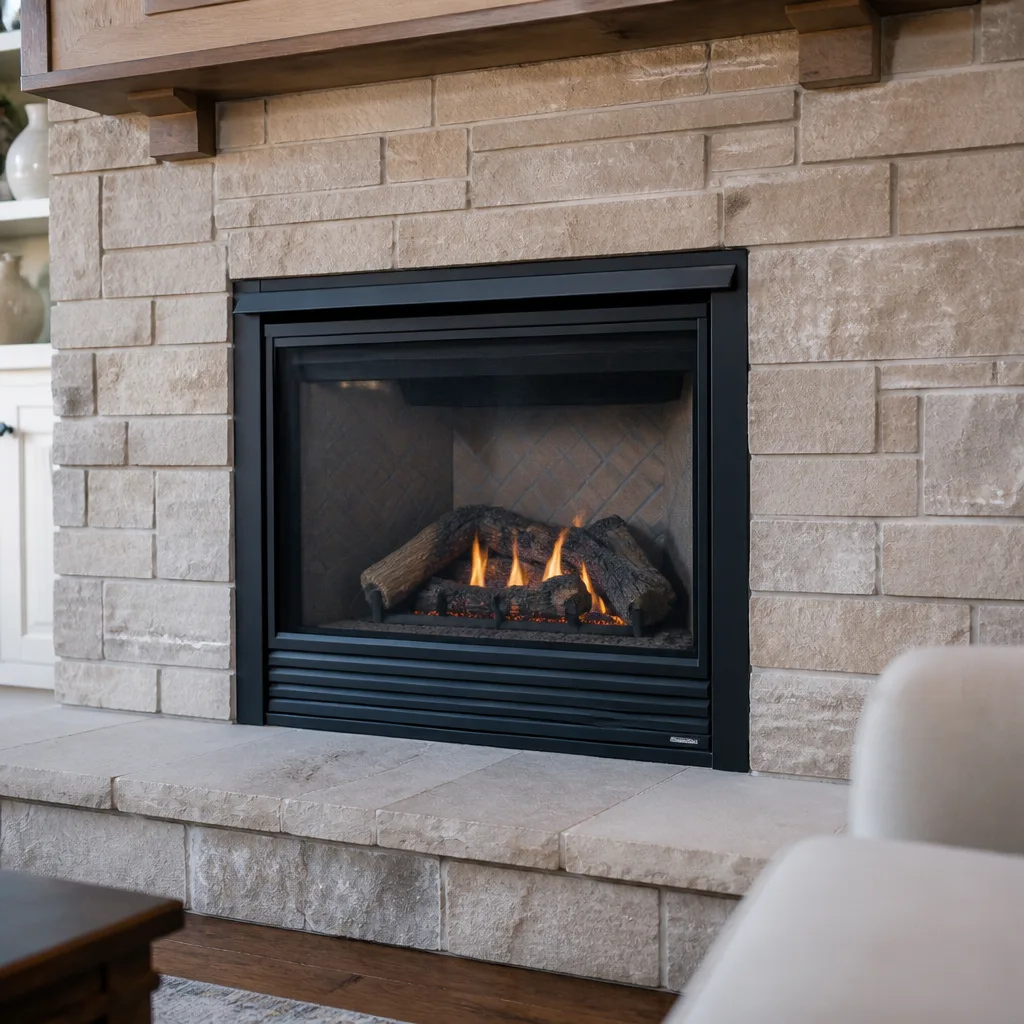 Gas fireplace service
Level 1 sweep and inspection to the NFPA 211 annual standard - flue, crown, cap, and flashing checked and photographed
Chimney sweep logs do not sweep chimneys. They loosen some creosote - which then falls where a brush and vacuum still have to collect it.
Chimney Sweep Troubleshooting in Salt Lake City: Common Problems and How to Fix Them
If smoke is backing into your living room, the instinct is to crack a window and wait for the fire to catch. That temporary fix is masking one of four distinct draft failures, and each one needs a different repair. The window trick works because it equalizes pressure in the room; it doesn’t fix the flue, the cap, the liner or the wood you’re burning. Most homeowners in Salt Lake City blame “bad drafting” or “green wood” when the real problem is mechanical and diagnosable. This guide walks through the symptoms you’re likely seeing, matches each one to its actual cause, and tells you which problems you can handle yourself and which ones need a sweep with a camera.
Quick Answer
Smoke problems in Salt Lake City chimneys usually come from one of four causes: a cold flue that hasn’t warmed up, negative pressure from a tight house or competing exhaust fans, an obstruction like creosote buildup or a nest, or a flue that’s undersized for the appliance. Salt Lake Valley’s winter temperature inversions trap cold air at ground level and worsen negative pressure, which is why smoke issues spike here between December and February. A camera inspection tells you which failure you have before you spend money on the wrong repair.
Styles & brands we work with
- Sweep & inspection
- Caps & crowns
- Flue relining
- Masonry repair
- Gas fireplace service
Table of Contents
- Symptom Map: Matching What You See to What’s Wrong
- Why Salt Lake Valley Inversions Worsen Drafting Problems
- The Elevation Factor: What 4,300 Feet Does to Combustion Air
- Smoke Rollout and Slow Draw: Four Draft Failures Explained
- Persistent Odor After Cleaning: What It Signals
- Sparking, Popping and Flue Noise
- Your Dryer Vent Is Part of the Same Fire System
- Decision Tree: DIY Check vs. Call a Pro
Symptom Map: Matching What You See to What’s Wrong
Troubleshooting a chimney starts the way a tradesperson troubleshoots anything: identify the symptom, then work backward to the system failure. Generic advice to “get it inspected” doesn’t tell you what to look for or whether the fix is a five-minute adjustment or a reline. Here’s the map we use in the field.
- Smoke rolls out the front of the firebox when you light the fire. Cold flue, or negative pressure pulling air down the chimney. Common in older homes along the Avenues and in Sugar House where the original fireboxes are shallow.
- The fire burns but the draw is weak. Partial obstruction, an undersized flue, or a flue that’s too tall for the appliance. Camera inspection confirms which.
- A sour, smoky smell lingers even when the fireplace is cold. Creosote residue, moisture in the flue, or a draft coming down a chimney that has no top-sealing damper.
- Popping, crackling or sparking beyond normal fire noise. Wet wood, or creosote that’s begun to glaze and ignite in small patches.
- White staining on the exterior masonry. Efflorescence from water intrusion, not a smoke problem. Different repair entirely.
- Lint collecting around the dryer or a musty smell in the laundry room. Blocked dryer vent. Separate hazard, same visit.
Salt Lake City has a wide spread of housing stock, and construction era matters here. Homes built before the 1950s were often designed for open masonry fireplaces with generous flues. Homes from the 1970s and 1980s frequently have inserts or prefab fireplaces that need a properly sized liner, and a mismatched liner is one of the most common causes of chronic smoke problems we find. Knowing the symptom narrows the diagnosis before anyone steps on the roof.
Our chimney sweep visits begin with a camera inspection for exactly this reason: the symptom tells us where to look, and the camera confirms what we find. Sweeping without diagnosis is how homeowners end up paying for the same problem twice.
Why Salt Lake Valley Inversions Worsen Drafting Problems
Chimneys draft on the principle that warm air rises through the flue and pulls fresh air into the firebox behind it. That principle depends on the air pressure inside your home being slightly lower than the air pressure outside at the top of the chimney. During a Salt Lake Valley temperature inversion, a layer of warmer air sits above colder air trapped at ground level, and that trapped cold air changes the pressure dynamics around your roofline. Homes that draft fine in October start smoking in January.
This is why chimney problems in Salt Lake City cluster in winter, and why a fireplace that worked last season can suddenly misbehave. Three things happen during inversion season:
- Reduced stack effect. The temperature difference between the flue gas and the outside air is smaller, so the chimney pulls less.
- Downwash at the cap. Air moving over the roofline during stable inversion conditions can spill down the chimney rather than across it.
- Compounding pressure from modern homes. Tightly sealed houses built or retrofitted in the last thirty years push against the flue every time a bath fan, kitchen hood or dryer runs.
What can you actually do during inversion season? Crack a window near the fireplace before lighting the fire to relieve negative pressure. Warm the flue with a rolled newspaper torch held near the open damper for a minute before building the fire. Run the dryer and bath fans only when the fireplace isn’t running. These are band-aids, not fixes, but they make the difference between a usable fireplace and one that smokes into the room on a January evening. If you’re doing all three and the fireplace still smokes, the problem is deeper and needs a trained eye.
Residents in the lower bench areas closer to the valley floor notice inversion effects more than homes higher up the east bench, though wind exposure on the foothills creates its own pressure problems. There’s no single answer that fits every Salt Lake City address; the fix depends on the house, the flue and the appliance.
The Elevation Factor: What 4,300 Feet Does to Combustion Air
Salt Lake City sits at roughly 4,300 feet above sea level. Air is thinner at that elevation, and thinner air affects combustion in ways most national chimney guides never mention. Wood burns differently, appliances draft differently, and the volume of combustion air reaching the firebox is measurably less than at sea level.
What that means in practice for Salt Lake City homeowners:
- Fires need more air, not more wood. Compensating for thin air by adding more fuel creates a hotter, smokier fire that overwhelms the flue.
- Gas appliances need correct venting sized for elevation. A gas insert rated for sea-level operation may draft poorly if the flue wasn’t sized with elevation in mind.
- Draft readings need context. When we measure draft during an inspection, the numbers reflect the altitude. A draft reading that looks low compared to a coastal guide may be normal at 4,300 feet.
- Wood needs to be drier. Seasoned wood at elevation takes longer to reach the moisture content that burns cleanly, because the drying air itself is thinner and carries less moisture away.
The practical upshot is that a fireplace setup copied from a national guide written for sea-level conditions may underperform here even when everything is technically installed correctly. When a Salt Lake City homeowner calls us about chronic drafting, we look at the appliance, the flue sizing and the elevation together. That’s not a sales pitch; it’s how combustion actually behaves.
Wood moisture matters more at elevation too. Split wood stacked loosely, covered on top only, and given a full season to dry burns noticeably better than wood that’s been stacked tight and covered on all sides. Most chimney problems that look mysterious turn out to be a combination of elevation, moisture and a flue that’s slightly undersized.
Smoke Rollout and Slow Draw: Four Draft Failures Explained
Smoke coming into the room is the number one reason homeowners call us in Salt Lake City, and it’s almost never one problem. There are four distinct draft failures that produce the same symptom. Match yours to the description and you’ll know what you’re dealing with.
1. Cold Flue
The most common cause. A masonry flue that hasn’t been used in months stays at outside temperature, and cold air is heavy. When you light a fire, the warm gas wants to rise but the column of cold air in the flue blocks it. The smoke finds the path of least resistance, which is your living room.
What you can do: Warm the flue before lighting the fire. Hold a lit roll of newspaper near the open damper for thirty to sixty seconds. If the flue is properly sized and clear, the draw establishes and the fire burns clean. If warming the flue doesn’t work, the problem is one of the next three.
2. Negative Pressure
Your house is competing for air with its own exhaust fans. A bath fan, a kitchen hood, a dryer running in the next room, or a tight modern envelope with sealed windows all pull air out of the house. The chimney becomes the easiest path for replacement air to enter, so it flows backward, and smoke spills into the room.
What you can do: Turn off competing exhaust fans when the fireplace runs. Crack a window near the hearth. Check whether the problem is worse on cold, still days during inversion season – if so, negative pressure is likely.
3. Obstruction
Creosote buildup, a bird or squirrel nest, a fallen liner tile, or a blocked cap all reduce the flue’s cross-section. A partial obstruction creates a slow draw that’s still technically pulling, but not enough to carry smoke up and out. This is the one you cannot diagnose by feel.
What you can do: Nothing safe from the ground. A camera inspection is the only reliable way to see what’s inside a flue.
4. Undersized or Mismatched Flue
A flue that’s too small for the appliance cannot pull enough air to draft. This is common in Salt Lake City homes where a modern insert was added to a fireplace designed for open burning, or where a chimney was relined in the past with a liner sized for the wrong appliance.
What you can do: Nothing from the homeowner side. This requires measuring the flue, checking the appliance requirements, and often relining with a properly sized system. In our experience, this is the failure most often misdiagnosed as “bad wood.”
Notice that two of the four you can address, and two you cannot safely diagnose without eyes on the flue. Relining work on an undersized or damaged flue is exactly the kind of job where Forge Chimney Cleaning uses trade-grade systems like DuraFlex and Copperfield rather than off-the-shelf substitutes, because the liner is the part of the system that determines whether the fireplace drafts correctly for the next twenty years.
Persistent Odor After Cleaning: What It Signals
You had the chimney swept, and two weeks later the smell is back. This is a frustrating and common complaint in Salt Lake City, and it usually means one of three things.
Creosote Residue in Porous Masonry
A standard sweep removes creosote from the flue walls, but older oil-fired or heavily used masonry flues can hold creosote deep in the pores of the clay. Humidity pulls it back to the surface, especially in spring. Resurfacing with a repair-grade system like HeatShield seals the flue surface and stops the cycle. This is a repair capability that sweep-only services don’t offer, and it’s the difference between a temporary fix and a permanent one.
Downdraft Through an Open Chimney
An unsealed chimney with no top-sealing damper acts as a chimney 365 days a year, even in summer. Warm air rises out of the house, and the chimney pulls air in from outside to replace it, carrying the smell of last winter’s creosote with it. A top-sealing damper, specified with standard trade hardware from brands like Olympia Chimney, cuts that flow.
Moisture in the Flue
Water intrusion through a failing crown, cracked cap or missing rain cover creates a damp flue that smells sour. Fixing the crown and cap resolves the smell more reliably than any chemical treatment.
If you’ve had the chimney swept and the smell returns within a season, ask the person who swept it what the camera showed. If they can’t answer, that’s a sign the sweep was surface-level. Odor after cleaning is a diagnostic clue, not a normal consequence of having a fireplace.
Sparking, Popping and Flue Noise
Every wood fire pops. But the wrong kind of popping is a warning sign. Here’s how to tell the difference.
- Normal popping: Occasional, muted snaps from sap pockets and moisture in the wood. Fine.
- Wet wood popping: Loud, frequent crackles with visible steam from the ends of the logs. The fire is working too hard. Fix the wood, not the fireplace.
- Creosote popping: Sharp, crackling sounds coming from the chimney flue itself, not the firebox. This can indicate glazed creosote igniting in patches. It’s a chimney fire risk and worth an immediate inspection.
- Sparking from the top of the chimney: Usually a sign the cap is missing or damaged, or that burning embers are escaping. Needs a chimney cap inspection.
- Rumbling or roaring from inside the flue: Get out of the house and call the fire department. That’s a chimney fire until proven otherwise.
Salt Lake City’s dry winter air (relative humidity regularly in the teens and twenties) makes creosote flakier and more prone to popping than in more humid climates. It also makes chimney fires burn hotter and faster. That’s a reason to take crackling sounds seriously, not a reason for panic.
One noise that gets misdiagnosed constantly: a whistling or howling sound during windy days. That’s the cap or the flue top creating a pressure difference. It’s annoying, but not dangerous on its own. It shouldn’t be ignored, though, because the same pressure dynamics that cause the whistle can push smoke back into the house during inversion season.
Your Dryer Vent Is Part of the Same Fire System
We can’t troubleshoot a chimney without mentioning the other fire hazard in the house. Lint buildup in dryer vents is one of the most overlooked home fire risks, and it’s the same category of problem as a dirty chimney: obstruction, restricted airflow, and a fuel source (lint) sitting in a hot environment. dryer vent cleaning is a routine service, not an emergency, but it should be part of every homeowner’s maintenance calendar.
Signs your dryer vent is restricted:
- Clothes take longer than usual to dry. Two cycles to do what used to take one.
- The dryer itself gets hot to the touch on the outside cabinet.
- The laundry room feels humid or sticky after a cycle.
- Lint appears around the outside vent rather than being blown clean away.
- A musty or scorched smell from the dryer.
Salt Lake City’s dry climate means laundry rooms don’t feel humid by weather, so a stuffy laundry room is a real symptom, not background humidity. When we run a chimney sweep in Salt Lake City, we often recommend checking the dryer vent during the same visit. It’s the second fire hazard, and it doesn’t get checked by anyone else.
Decision Tree: DIY Check vs. Call a Pro
Here’s how we tell homeowners to work through a chimney problem before calling. The first steps are safe for anyone. The later steps are not.
Safe for homeowners to check
- Open the damper fully and look up. Use a flashlight. You can see whether the damper operates and whether there’s visible blockage in the first few feet. Don’t reach up with a tool.
- Check the firewood. Split a piece and look at the fresh face. If it’s wet or green, the wood is the problem. Properly seasoned wood is lighter than it looks, gray at the ends, and cracks in the grain.
- Turn off exhaust fans. Run the fireplace with the bath hood and dryer off. If smoke rollout stops, the problem is negative pressure.
- Warm the flue before lighting. Lit newspaper near the damper for thirty seconds. If the fire then burns clean, the problem is a cold flue.
- Look at the exterior from the ground. A damaged cap, a leaning chimney, missing mortar or staining on the brick all show up from the driveway with binoculars.
Call a professional
- The problem persists after the safe steps above. If wood is dry, exhaust fans are off, the flue is warmed, and the fire still smokes, the flue needs a camera.
- Any sign of glazed or flaky creosote. Third-degree creosote is a fire risk. Don’t burn another fire until it’s removed.
- Any noise from inside the flue during a fire. Rumbling, roaring or repeated crackling from the chimney, not the firebox, is a stop sign.
- A gas appliance involved. Carbon monoxide doesn’t have a smell. Any concern about a gas insert, gas log set or furnace flue goes to a trained technician immediately.
- Odor that returns after a sweep. Surface cleaning wasn’t enough. The flue needs evaluation for resurfacing or relining.
- A “bad drafting” diagnosis from a previous contractor. Drafting is measurable. If nobody measured it, get a second opinion.
One caveat that matters: high-tension components, tall ladders and roof work are all hazards where a trained chimney professional with the right safety gear is safer than a homeowner. The savings from DIY roof work is small compared to the risk. If the check requires getting on the roof or opening up the chimney structure, call.
Common Mistakes to Avoid
- Treating all smoke problems as “bad wood.” Wet wood causes smoke, but so does negative pressure, cold flue and obstruction. Buying better firewood fixes maybe a quarter of the smoke calls we see in Salt Lake City.
- Skipping the camera and relining on a hunch. A liner replacement is a significant expense, and it’s justified when the camera shows damage or a mismatched flue. Not on a guess. Ask to see the footage.
- Running a fire during a heavy inversion without warming the flue. Cold flue, negative pressure and no margin for error is the recipe for smoke rollout. Warm the flue every time during December and January.
- Burning treated, painted or construction scrap wood. These create more creosote and sometimes toxic fumes. Stick with seasoned hardwood.
- Ignoring the dryer vent because the chimney was just cleaned. Two fire hazards, two systems. One visit checks both, but only if you ask.
- Assuming a sweep means the chimney’s been inspected. A sweep removes creosote from the flue walls. An inspection evaluates the flue with a camera for cracks, gaps and liner integrity. Those are different jobs and the second one is the one that catches problems early.
- Waiting until the smell is unbearable to call. Creosote, moisture intrusion and masonry cracks get worse with every season. What’s a resurfacing job with HeatShield this year is a reline or rebuild in three years.
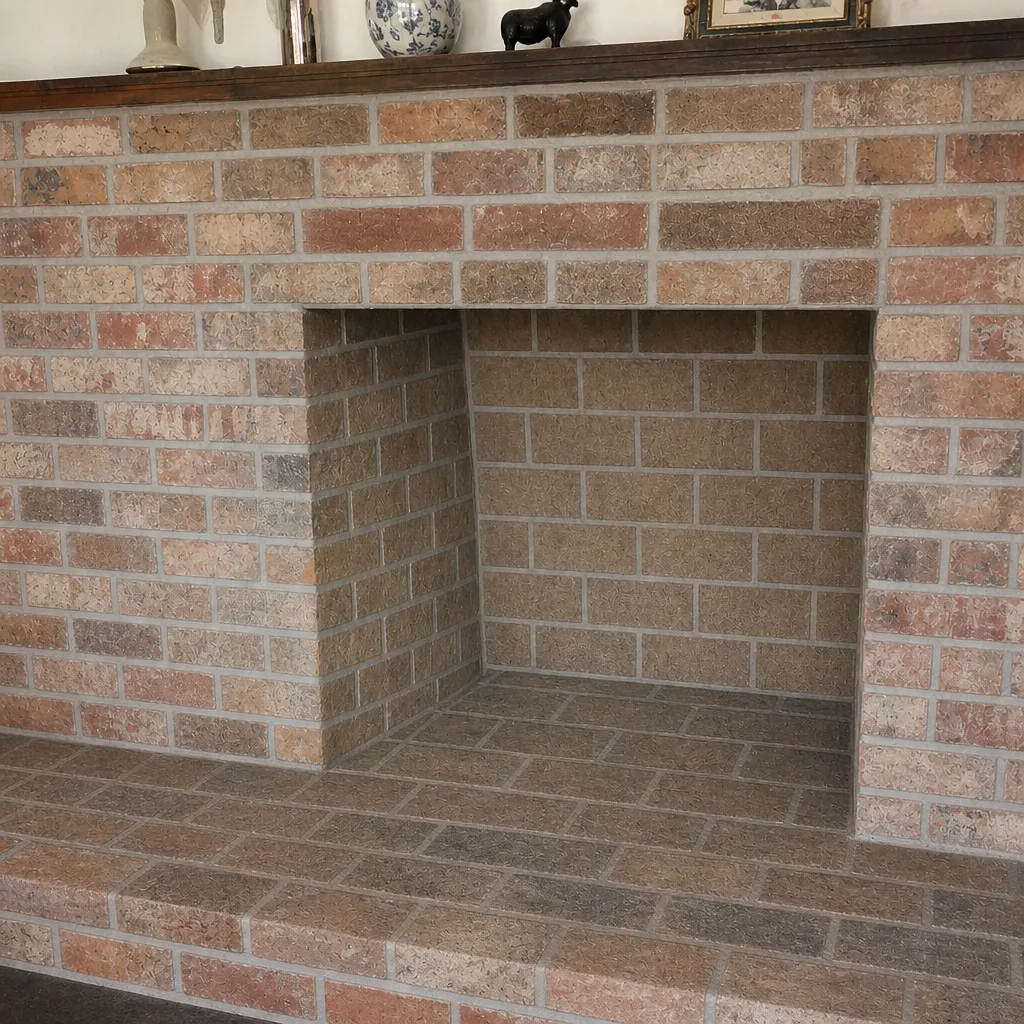
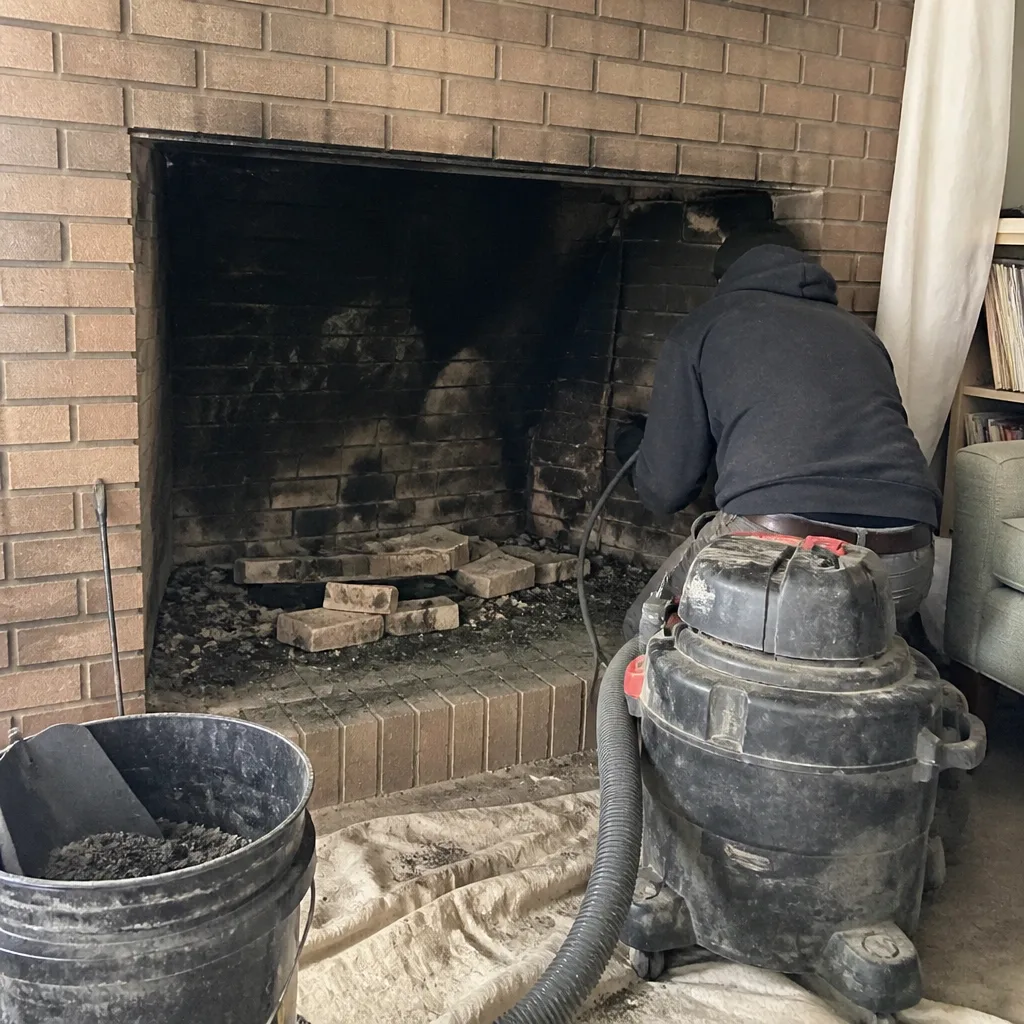
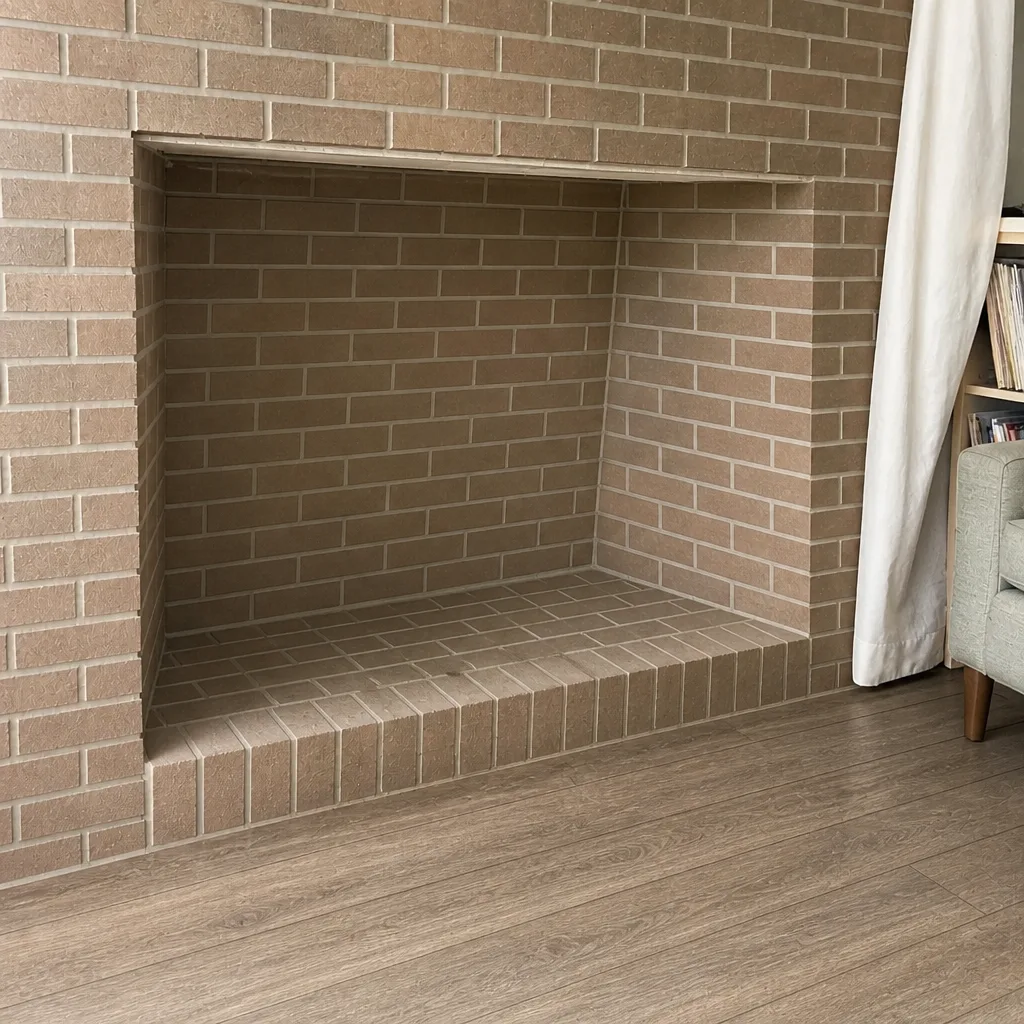
See the difference
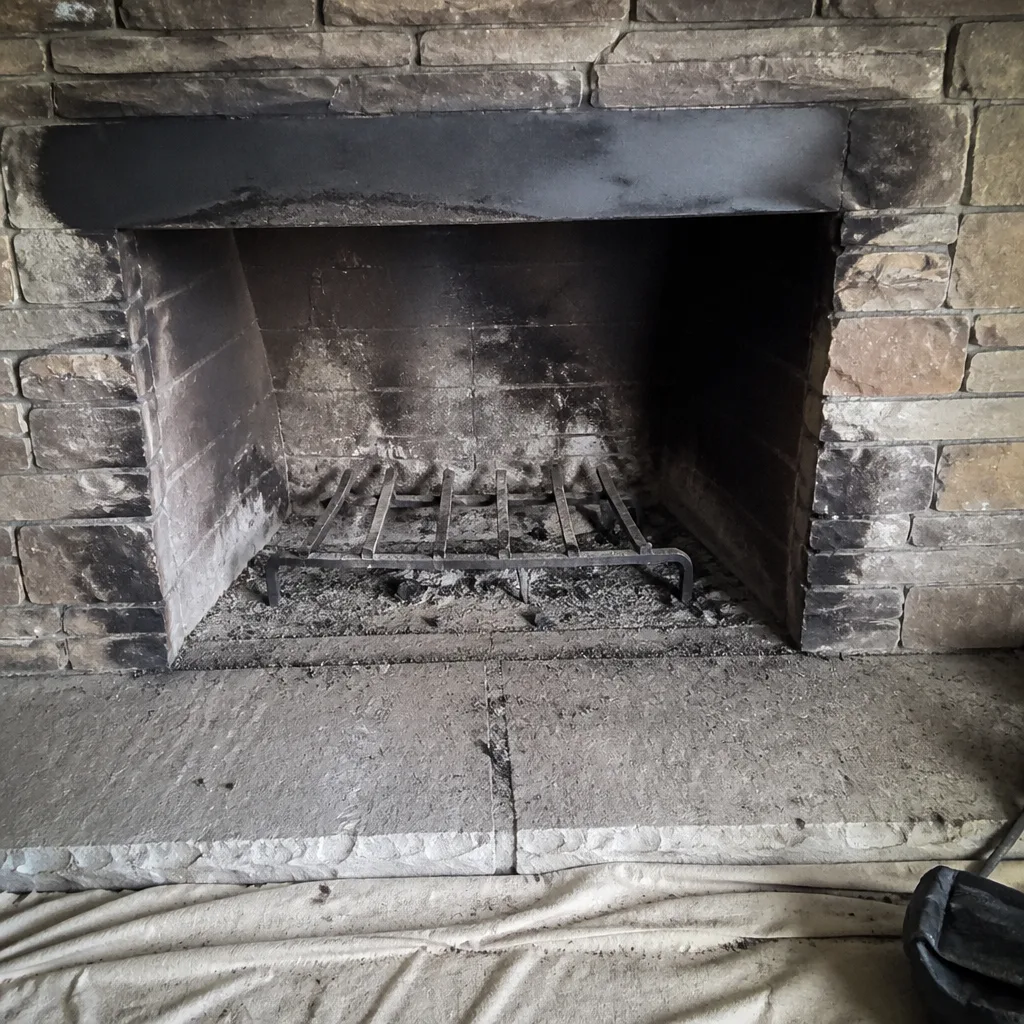 Before
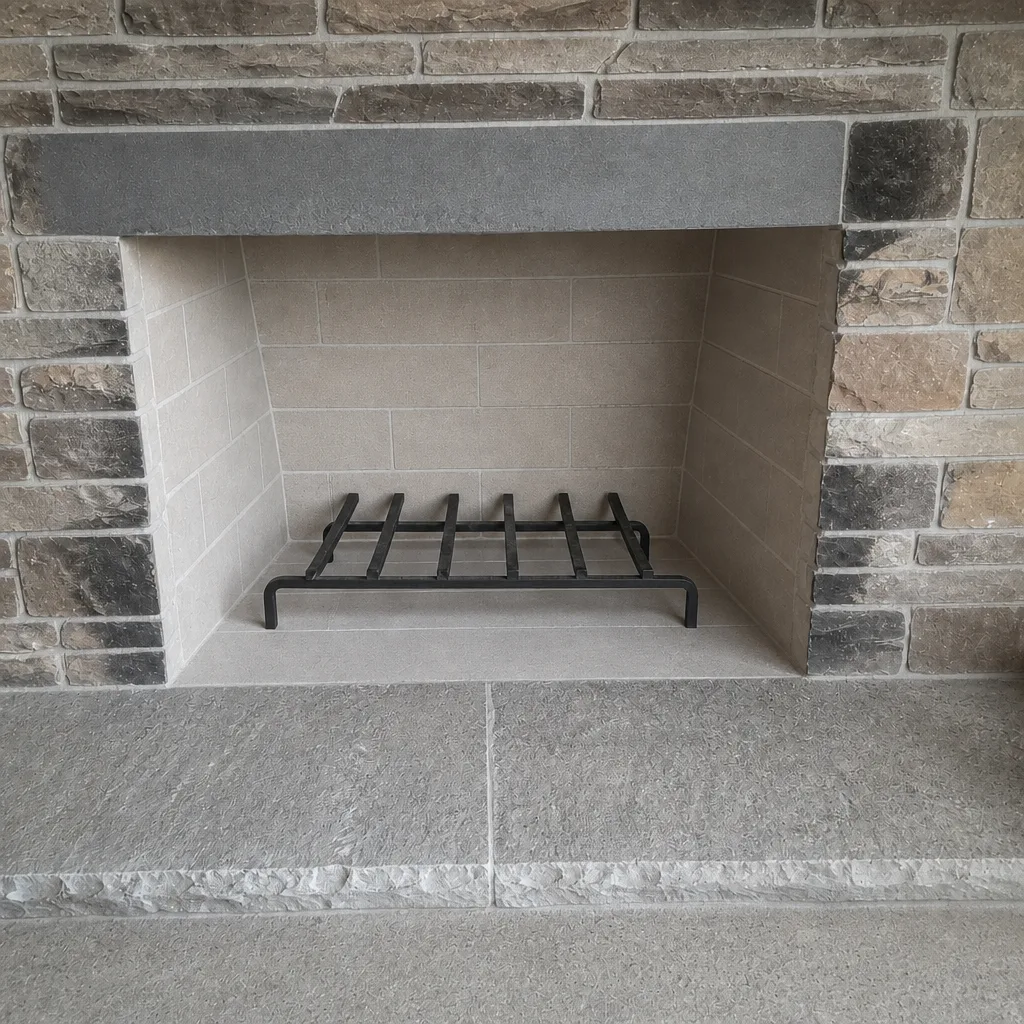 After
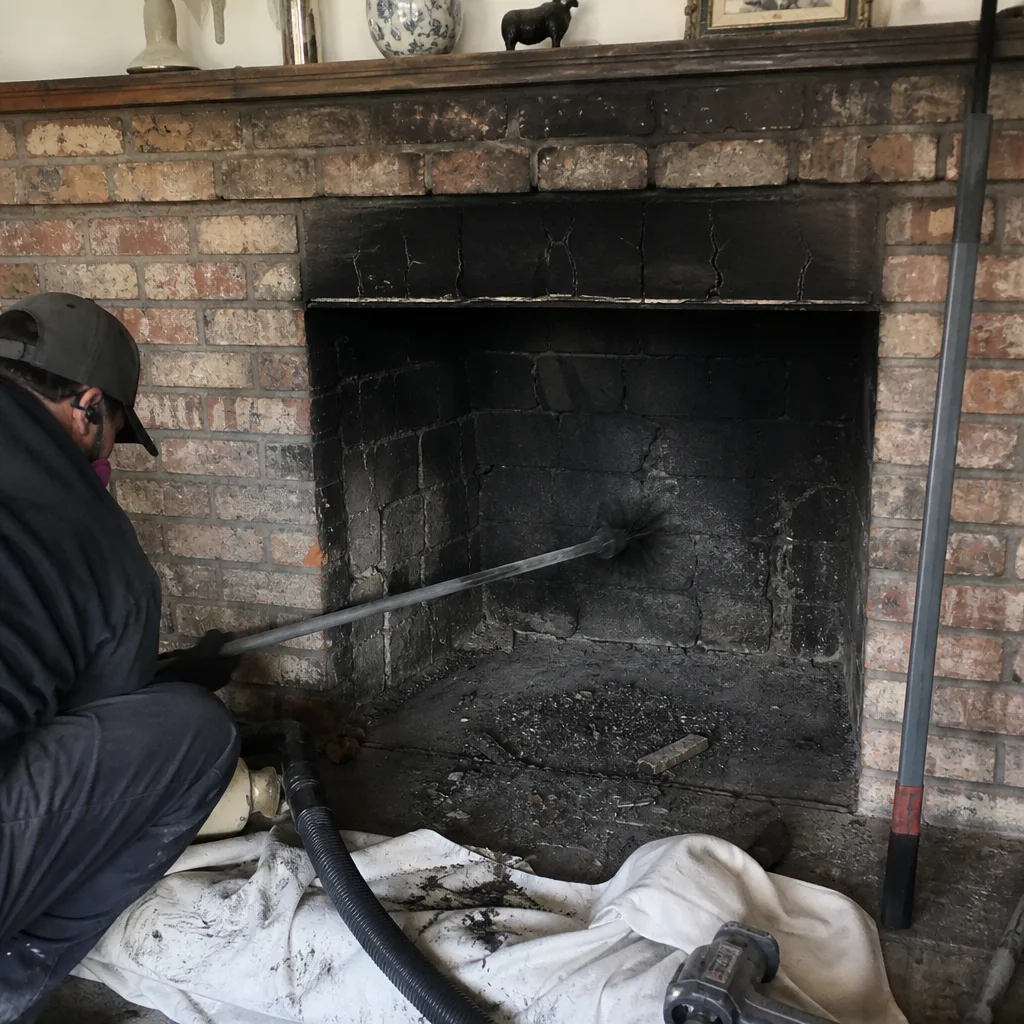 Before
 After
 Before
 After
When to Call a Professional
Call a chimney professional when smoke rolls into the room despite dry wood and a warmed flue, when creosote is glazed or flaky, when you hear crackling from inside the flue, or when a gas appliance is involved and you can’t rule out a venting issue. Call when the odor returns after a sweep, when there’s visible damage to the cap or crown, or when the last contractor told you “the drafting’s just bad” without measuring anything. Salt Lake City homeowners should also schedule an inspection when the fireplace hasn’t been checked since the previous winter, or when a home has just been purchased. Forge Chimney Cleaning offers free estimates in Salt Lake City. Call (833) 497-1153. We answer 24/7. Fast dispatch from 7am to 7pm, Sunday through Friday.
Our technicians have up to 15 years of experience, and every chimney visit starts with a camera inspection because the right fix depends entirely on which failure you actually have. Same-day service is often possible when we’re dispatched. The written estimate sets the final price per job, and nothing is recommended without evidence you can see for yourself.
Frequently Asked Questions
Smoke rollout almost always comes from one of four causes: a cold flue, negative pressure from exhaust fans or a tight house, an obstruction like creosote or a nest, or a flue that’s undersized for the appliance. Salt Lake Valley inversions make negative pressure worse between December and February. Warm the flue and turn off bath and dryer fans first. If smoke still rolls in, call (833) 497-1153 for a camera inspection and a free estimate.
A standard chimney sweep in Salt Lake City typically runs a few hundred dollars depending on the flue condition and whether a camera inspection is included. The final price is set by the written estimate per job, so you know the cost before we start. We sweep, repair and restore as one service, which means the inspection and any needed repair can be quoted together. Call (833) 497-1153 for a free estimate.
Only if the camera shows a genuine problem. A damaged, cracked or mismatched flue needs relining to draft safely, and a DuraFlex liner or HeatShield resurfacing is the right fix. A flue that’s intact and properly sized doesn’t need a liner replacement, no matter what a contractor says. Ask to see the camera footage before approving any liner work. Call (833) 497-1153 and we’ll show you what we find.
Once a year for most wood-burning fireplaces, and more often if you burn frequently or notice draft problems. Salt Lake City’s dry winter air makes creosote flakier and more prone to ignition, which is a reason to keep the annual sweep on schedule. Gas inserts still need annual inspection even though they produce less creosote. Call (833) 497-1153 to book a sweep.
Creosote keeps accumulating, and once it reaches a glazed stage it’s a fire risk that a standard sweep can’t remove. A blocked or restricted flue also worsens drafting problems during inversion season, which turns a small ignition risk into a smoke-in-the-house problem every January. Carbon monoxide from a gas appliance is the other concern, and it has no smell. Call (833) 497-1153 for a free estimate before the next burning season.
Odor from a dormant chimney usually means creosote residue in porous masonry, downdraft through an open chimney, or moisture in the flue. Resurfacing with HeatShield seals the porous surface and stops the odor cycle, and a top-sealing damper cuts the year-round draft. If the smell returns after a sweep, the flue needs a camera inspection. Call (833) 497-1153, and we’ll diagnose the cause before recommending any work.
The Bottom Line
Most chimney problems in Salt Lake City are diagnosable. Cold flue, negative pressure, obstruction and mismatched flue sizing are the four mechanical causes behind almost every smoke complaint, and each one needs a different repair. The valley’s inversion seasons and 4,300 feet of elevation make both of those factors worse than in other markets, so a fix that works in a sea-level city may not work here. Warm the flue, burn dry wood, and turn off competing exhaust fans. Beyond that, a camera inspection is the only way to know what’s actually inside your chimney. We sweep, repair and restore as one service because the symptom map only works if the diagnosis is honest. If your Salt Lake City chimney is misbehaving, call Forge Chimney Cleaning for a free estimate and a written scope you can verify before you spend anything.
Your Salt Lake City home deserves a chimney that drafts cleanly, and the fix is usually simpler than the last person told you. Call Forge Chimney Cleaning at (833) 497-1153 for a free estimate. We answer 24/7. Fast dispatch from 7am to 7pm, Sunday through Friday.
Written by the team at Forge Chimney Cleaning.